

Waterproof Coating vs Waterproof Mortar: Which One Actually Stops Basement Leaks?
Waterproof mortar outperforms waterproof coating on below-grade walls because it bonds mechanically into the substrate and resists negative-side water pressure — while most coatings are membrane systems designed for positive-side (exterior) application. Coatings still have a place. Just not usually as the primary defense against a wet basement wall. The short answer is material physics, and it matters more than application technique.
Why Do Basement Waterproofing Coatings Keep Failing After a Year or Two?
If you’ve painted on a waterproof coating and watched it bubble, whiten, or peel off within a couple of years, you’re not alone — it’s one of the most common complaints in basement waterproofing. The usual explanation is “bad workmanship,” but the real issue is often more fundamental: the material itself wasn’t built for this environment.
Below-grade walls face negative hydrostatic pressure — groundwater pushing from the outside in — combined with fine structural cracks from settlement or shrinkage. A thin surface film has to fight both of these at once, from the wrong side of the wall. That mismatch between material and job is usually what kills the coating, not a one-off application mistake.
Coating vs. Mortar: Not the Same Product Category
What Is Waterproof Coating, Really?
Waterproof coatings are typically polyurethane, acrylic, or rubberized membrane products. They form a flexible film on top of the substrate rather than bonding into it. That film can stretch and move, which is an advantage on a positive-side (exterior, water-facing) wall — but on the inside of a damp basement wall, adhesion is the weak point, since the coating is fighting to stick to a surface that water is actively pushing against from behind.
What “Waterproof Mortar” Actually Means in 2025
The term covers more ground than it used to. Three categories get lumped together constantly, and they perform very differently:
- Traditional cement parge/render — a basic cement-sand coat, mainly cosmetic, with limited crack resistance on its own.
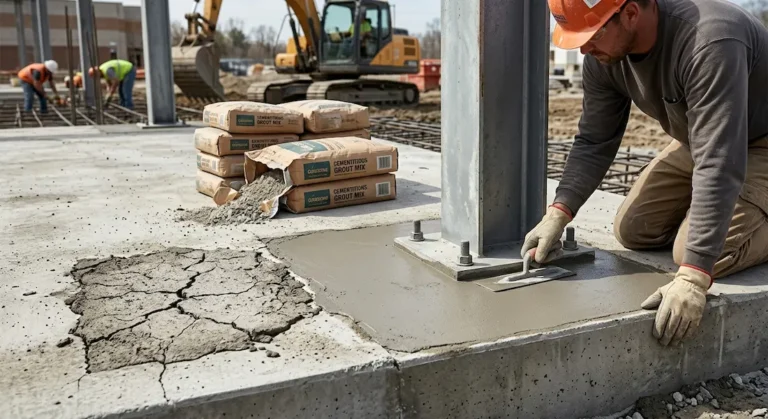
- Hydraulic cement / rapid-set plugging compounds — fast-setting patches good for stopping active water flow at a specific point (like a pipe penetration), but rigid and prone to cracking under movement if used across a whole wall.
- Polymer-modified, crack-resistant waterproof mortar — a cementitious base combined with polymer additives, reinforcing fibers, and graded aggregates, designed to bond structurally into the substrate rather than sit on top of it.
Four Performance Tests That Separate Them Underground
Negative Hydrostatic Pressure: Why Coatings Lose From the Start
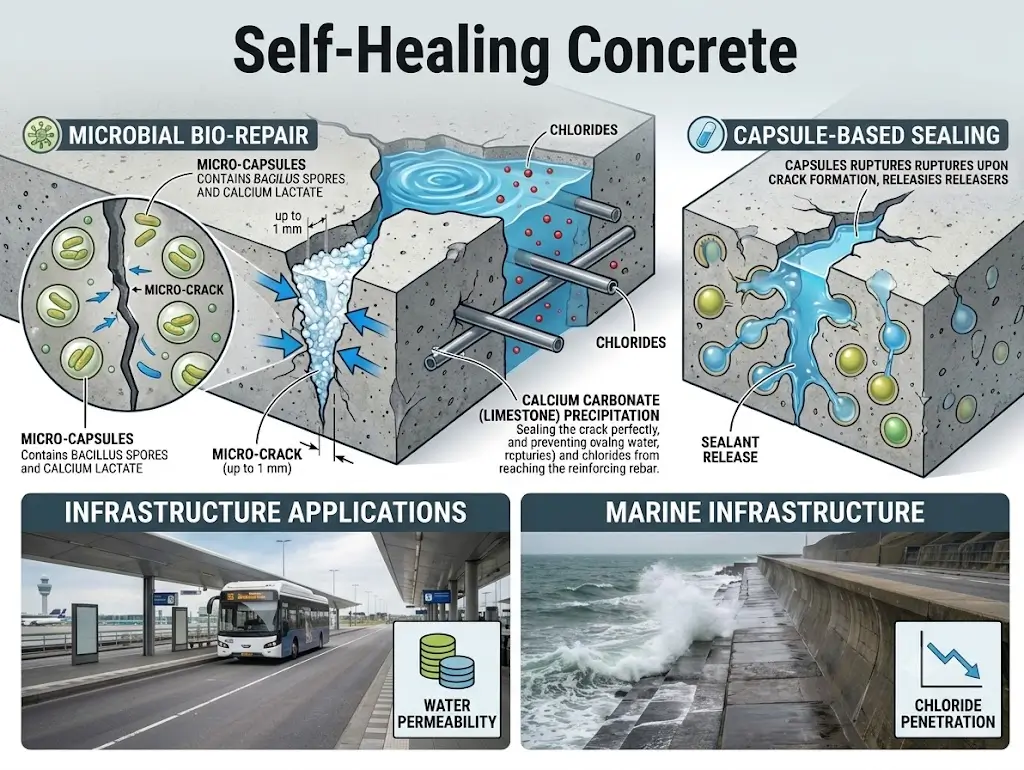
Polymer waterproof mortar handles negative-side pressure better because its active ingredients penetrate the pore structure of concrete or masonry as it cures, forming a dense crystalline waterproof layer — a mechanical-chemical bond, not a surface film. Under JC/T 984-2011 / JG/T 158-2013 testing, ChenSon’s polymer waterproof mortar achieves an impermeability pressure of ≥1.5 MPa. A coating relies on adhesion alone — and under sustained pressure pushing from behind the wall, that adhesion is exactly what gives way first. Under enough pressure, the film doesn’t tear — it just lifts clean off the wall, sometimes in sheets.
What Happens When the Foundation Moves 0.3mm
Basements move — minor settlement, seasonal freeze-thaw, and shrinkage routinely open hairline cracks in the range of a few tenths of a millimeter. A rigid, unreinforced mortar can crack right along with the substrate. A plain elastic coating can bridge a crack for a while, but repeated flexing under water pressure eventually fatigues and punctures it.
Polymer-modified, fiber-reinforced waterproof mortar handles this better — and the spec numbers show why. Flexural strength of ≥8 MPa and a compressive-to-flexural ratio of ≥3.0 (per JC/T 984-2011 / JG/T 158-2013) means the polymer network and embedded fibers distribute stress across the crack rather than concentrating it at one point. The low-shrinkage formulation (shrinkage rate ≥0.15%) cuts down the internal stress that drives new cracks to begin with.
The Salt Problem Nobody Talks About With Coatings
A sealed film coating traps moisture vapor behind it. When that trapped moisture carries dissolved salts, those salts crystallize against the coating from the inside — and the crystallization pressure is what actually pushes the film off the wall. It’s not the water that causes the bubbling. It’s the salt. A mineral-based waterproof mortar lets water vapor migrate out slowly while still blocking liquid water from passing through, which sidesteps this failure mode entirely.
Substrate Prep: The Hidden Advantage of Mortar
Coatings need a clean, dry, reasonably flat substrate to bond properly — a condition that’s hard to meet on any existing basement wall, let alone one that’s been wet for years. Waterproof mortar tolerates a damp substrate and is applied at a recommended thickness of 3–10mm in layered passes, which means it can level minor surface defects — bug holes, honeycombing, uneven block faces — while waterproofing them at the same time. That’s two steps in one, and it matters on renovation jobs where the wall surface is far from ideal.
At a Glance: Coating vs. Mortar in Basement Conditions
| Factor | Waterproof Coating | ChenSon Polymer Waterproof Mortar |
|---|---|---|
| Bond mechanism | Surface film, adhesion-dependent | Active ingredients penetrate pores, forming a crystalline layer |
| Impermeability pressure | Not rated for negative-side use | ≥1.5 MPa (JC/T 984-2011 / JG/T 158-2013) |
| Bond strength (cement mortar) | Varies by product | ≥0.7 MPa; ≥0.5 MPa after water immersion |
| Compressive strength | N/A (film, not structural) | ≥24 MPa |
| Flexural strength | N/A | ≥8 MPa |
| Shrinkage rate | Can shrink and pull away from substrate | ≥0.15% (low-shrinkage formulation) |
| Substrate tolerance | Needs clean, dry, flat surface | Tolerates damp substrates; 3–10mm layer doubles as leveling coat |
| Best suited for | Positive-side/exterior, dry interior finish coats | Negative-side (interior) basement, underground seepage control, EPS/XPS rendering |
Which One Does Your Project Actually Need?
When Coating Is the Right Call
Coating makes sense in a few specific situations: on the exterior (positive) side of a new foundation wall before backfilling, on surfaces that see occasional dampness rather than active water pressure, or as a cosmetic topcoat over an already-waterproofed interior wall. In those cases, its flexibility and ease of application are genuine advantages.
Why Most Basement Jobs Call for Mortar Instead
The problem is that most real-world basement conditions don’t match what coating was designed for. CMU block walls have dozens of mortar joints — each one a potential leak path. Poured concrete shear walls often come out of the form with minor honeycombing or shrinkage cracks already present. And in existing buildings where excavating the exterior isn’t practical, interior (negative-side) treatment is often the only option on the table. That’s precisely the condition polymer waterproof mortar is built for.
How to Apply Crack-Resistant Waterproof Mortar: Four Steps That Actually Matter
1. Get the substrate down to bare, sound material — don’t skip this. If the mortar doesn’t key into solid concrete or masonry, nothing else you do matters. Remove all loose material, laitance, and powdery efflorescence, then roughen the surface mechanically. The bond depends on it.
2. Seal active water points before spreading anything. Pipe penetrations, tie-rod holes, inside/outside corners — treat those first, usually with a fast-setting hydraulic cement plug. Form a small cove fillet at corners rather than a sharp 90° angle, which is where stress concentrates and cracks start.
3. Apply in layered passes, not one thick coat. Trowel or spray-apply to a total thickness of 3–10mm, built up in layers. For a 25kg bag, mix with approximately 5.5–6kg of water; for the 40kg bag, use 8.5–10kg of water, mixing until smooth. Where movement is likely — corners, joints, transitions — embed alkali-resistant fiberglass mesh between coats for added crack resistance.
4. Cure properly, or the first three steps were wasted. Cementitious mortar needs to hydrate fully during the curing period. Applying a finish coat too early locks in incomplete hydration and undermines the whole system — regardless of the material quality.
The Bottom Line
A thin film coating on a basement wall is fighting a battle it wasn’t designed for. Negative-side water pressure and structural micro-movement aren’t edge cases underground — they’re the baseline. A polymer-modified, crack-resistant waterproof mortar that bonds into the substrate, tolerates a damp surface, and manages both water pressure and minor cracking is the more durable choice for interior basement waterproofing.
Trying to match the right mortar type, thickness, or mix ratio to your wall — CMU block, poured concrete, or an older masonry foundation? ChenSon’s polymer waterproof and crack-resistant mortar is available in 25kg and 40kg bags, in both waterproofing and anti-cracking formulations. Request a project quote or email wjc.2628@gmail.com to get a spec sheet matched to your substrate and seepage conditions.
FAQ
Can I apply waterproof coating over waterproof mortar? In some systems, a coating is used as a topcoat over a fully cured waterproof mortar base for cosmetic or additional protection. ChenSon’s polymer waterproof mortar must not be mixed with other mortars or coatings during application itself, but layered systems need case-by-case compatibility confirmation. Contact us with your substrate and finish details for specific guidance.
Does hydraulic cement crack easily? Plain hydraulic cement is rigid — without reinforcement, it cracks under substrate movement, which is exactly why it’s suited for plugging an active leak at a specific point, not coating an entire wall. Polymer-modified, fiber-reinforced waterproof mortar handles larger surface areas without the same brittleness risk.
Can waterproof mortar be applied to a damp basement wall? ChenSon’s polymer waterproof mortar can be applied to a damp substrate, provided the surface is clean and free of standing water. The condition to avoid is damp combined with poor ventilation — that combination inhibits proper curing. Don’t apply below 0°C. Active seeps at specific points need to be stopped first before you spread the mortar across the full surface.
How thick should waterproof mortar be applied in a basement? Recommended application thickness is 3–10mm, built up in layered passes. For a 25kg bag, mix with approximately 5.5–6kg of water; for a 40kg bag, use 8.5–10kg. Walls with more significant surface defects or higher water pressure exposure warrant working toward the upper end of that range.
Is fiberglass mesh necessary with waterproof mortar? It depends on where you’re applying it. Corners, control joints, and wall-to-floor transitions move more than open field areas — those spots warrant mesh. Flat, stable wall surface with no history of cracking? You can skip it. When in doubt, embed it; the cost is low and the crack resistance it adds at vulnerable points is real.