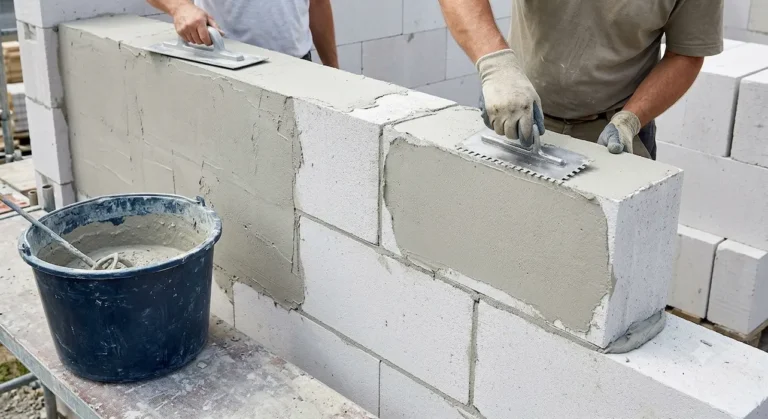


Equipment gets installed, and within days the base starts settling. A grouting layer finishes curing, and cracks spread across the surface like a spiderweb. On a lot of job sites, the cause traces back to material rather than technique — standard cement mortar doing a grouting job it was never built for.
Why ordinary mortar can’t handle equipment grouting
Equipment base grouting, anchor bolt fixing, secondary grouting between steel structures and concrete — these jobs demand something different from what a wall or plaster job needs. Standard cement mortar shrinks heavily as it dries and develops strength slowly. Put it under the precision and load these applications require, and problems show up over weeks or months: an uneven leveling layer first, then cracking, flaking, powdering, and in bad cases the equipment base settles or the anchor bolts work loose.
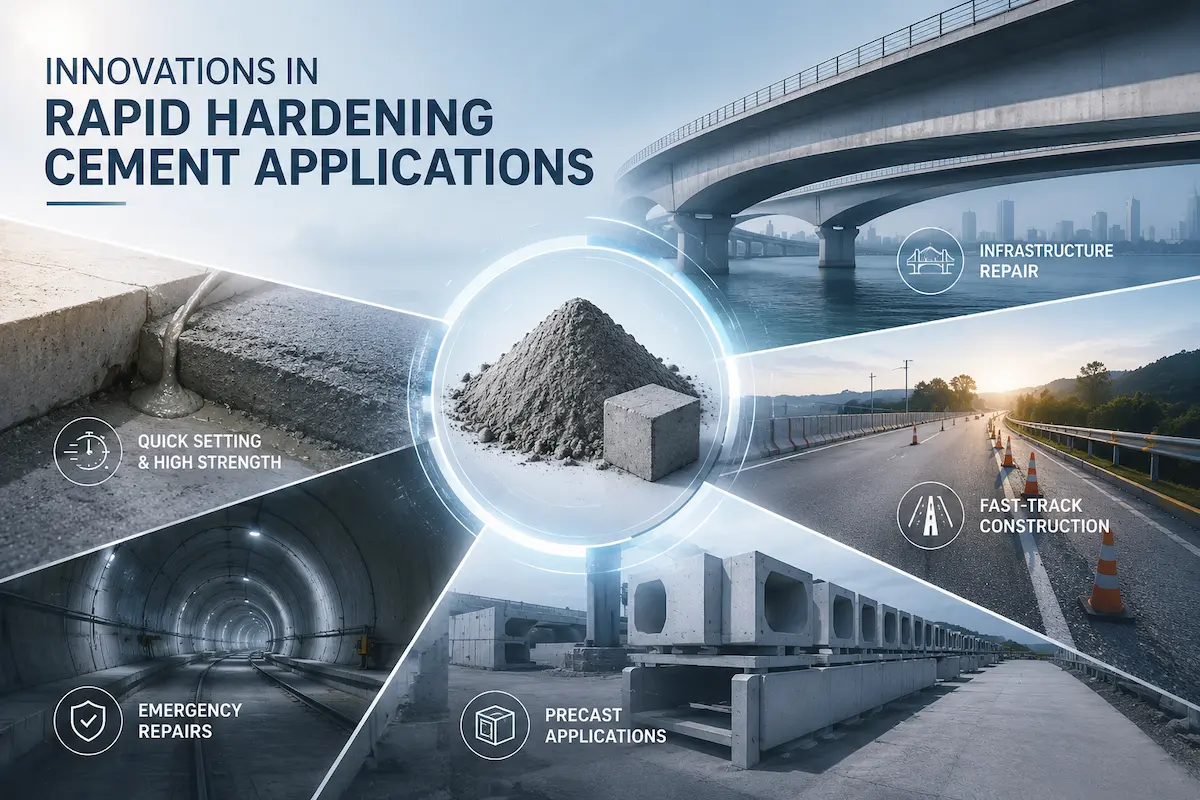
For high-speed rail track slabs and highway bridge bearings, a failed grouting layer means real rework costs and downtime losses — enough that tender documents in these sectors typically call out non-shrink, early-strength cementitious grout by name.
Three things that actually matter when choosing grouting material
Compressive strength is the first thing to check. ChenSon’s Cement Grouting Material is certified under JC/T 986-2018, China’s national standard for cementitious grout, and comes in four strength grades — A50, A60, A70, A85 — with the number corresponding to the minimum 28-day compressive strength in MPa.
| Age | A50 | A60 | A70 | A85 |
|---|---|---|---|---|
| 1 day | ≥15 | ≥20 | ≥25 | ≥35 |
| 3 days | ≥30 | ≥40 | ≥45 | ≥60 |
| 28 days | ≥50 | ≥60 | ≥70 | ≥85 |
The 1-day column matters most for emergency repair work. Equipment installations and breakdown fixes usually can’t wait 28 days for full cure — they need somewhere in the teens to mid-30s MPa within a single day just to get the equipment back in service. Pulling the early-strength curve rather than only checking the 28-day figure gives a much more realistic picture of actual turnaround time.
Flowability determines whether the grout actually reaches where it needs to go. The standard grades this too:
| Initial flow | 30-min flow | |
|---|---|---|
| Grade II | ≥340mm | ≥310mm |
| Grade III | ≥290mm | ≥260mm |
Insufficient flow means the grout can’t work its way into the tight gaps between an equipment base and its foundation, leaving voids. Flow that drops off too fast means the grout starts thickening before the pour is finished, which hurts density just the same. Ask a supplier for both figures directly rather than settling for a general claim about “good flowability.”
Micro-expansion and zero shrinkage is the core difference from ordinary mortar. Standard cement mortar shrinks as it dries, and that shrinkage stress builds up into cracks. ChenSon’s grout uses organic and inorganic compound additives to keep shrinkage near zero, with slight expansion during curing that fills the gap between the grout and the equipment base rather than leaving one behind.
What JC/T 986-2018 actually covers
JC/T 986-2018 is China’s building materials industry standard for cementitious grout, setting clear grading requirements for flowability, compressive strength, and vertical expansion rate. Whether a product meets this standard determines whether it can be used on projects with stricter compliance requirements — high-speed rail and bridge bearing projects typically name JC/T 986 compliance directly in the tender documents, and materials that don’t meet it don’t make the bidder list.
ChenSon’s grout is manufactured and tested against this standard, and the A50–A85 strength grades along with the Grade II/III flow classifications are the standard’s own official tiers.
Application notes: get these wrong and even good material won’t perform
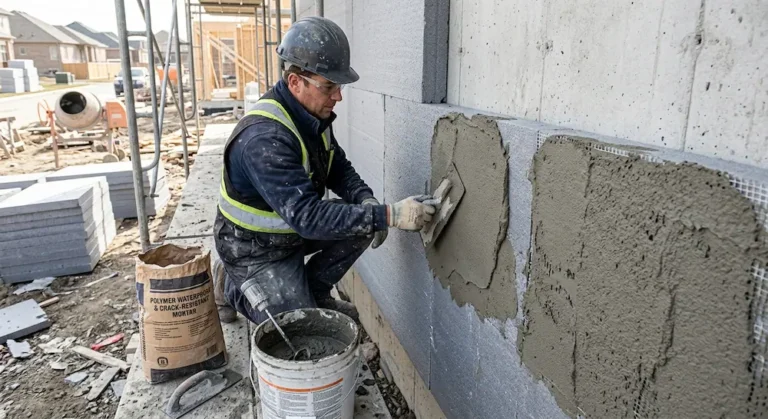
Clean the substrate thoroughly — no oil, dust, or debris — and clean anchor bolts and nuts completely, or gaps will remain between the grout layer and the bolts regardless of material quality.
Mix powder to water at a ratio of 1:0.12–0.14, adjusting slightly depending on whether the site calls for a dry-pack or flowable consistency.
Stir for 3–5 minutes for dry-pack or plastic consistency, or 7–9 minutes for flowable consistency, until the mix is free of lumps. Cut the stirring time short and the powder won’t hydrate fully — both strength and flowability suffer.
Use the mixed grout within 30 minutes. Never add water back into grout that’s started to dry, and never mix it with other mortars.
Store sealed, cool, and dry, and use it promptly once opened — moisture exposure affects performance in later batches. Shelf life is 6 months under proper dry storage; test a small batch first if material is close to that mark.
Get the technical data sheet and specify by the numbers
Choosing grouting material comes down to matching your project’s actual strength grade, flowability requirement, and schedule against the right product spec. If you’ve got an equipment grouting, bridge bearing, or emergency repair project on the table, reach out to ChenSon for the technical data sheet on the grade you need — A50, A60, A70, or A85 — and specify with real numbers instead of guesswork.
Huizhou Chenson Advanced Materials Technology Co., Ltd. runs its production out of a 50-acre facility with three fully automated m-tec (Zoomlion) lines, and holds certifications across quality, environmental, and occupational health & safety management systems. The client list has grown to over 1,200 companies across 15 countries. Get in touch with ChenSon’s technical team for a data sheet, a formula recommendation for your specific site conditions, or a sample to test before you order.