Cement production generates more CO₂ than the entire aviation industry — and demand is only growing. Responsible for roughly 6–8% of global carbon emissions, the cement sector faces an uncomfortable paradox: the world needs more cement to build homes, roads, and infrastructure, yet every tonne produced pushes climate targets further out of reach. Sustainable cement manufacturing is no longer a nice-to-have — it’s the defining challenge of the industry’s next three decades.
If you’re a cement producer, construction specifier, or sustainability leader watching carbon regulations tighten and green procurement mandates multiply, you already feel the urgency. The good news? The technologies and strategies to decarbonize cement are no longer theoretical. From clinker substitution to industrial-scale carbon capture, the pathways are real, commercially viable, and — in some cases — already operating.
This guide covers the seven key decarbonization pathways, real-world case studies from industry leaders like Heidelberg Materials and Holcim, and a practical roadmap that industry decision-makers can use to prioritize investments and meet 2050 net-zero targets. Want to see how these technologies compare side by side? [Download our sustainable cement technology comparison guide →]
Key Takeaways
- Cement accounts for 6–8% of global CO₂ emissions (roughly 1.6 billion metric tonnes in 2022), yet low-carbon clinker represents less than 1% of global production.
- LC³ (Limestone Calcined Clay Cement) can cut CO₂ by up to 40% without major capital investment, making it the most immediately scalable solution for emerging markets.
- Heidelberg Materials inaugurated the world’s first industrial-scale CCS at a cement plant in Brevik, Norway (June 2025), capturing 400,000 tonnes of CO₂ annually.
- The green cement market is projected to reach $38–40 billion by 2030, growing at 6–9.6% CAGR — creating a significant commercial opportunity for early movers.
- CCUS infrastructure capacity currently sits at less than 1% of what’s needed for 2050 net zero, making investment in capture technology this decade critical.
The Scale of the Challenge: Why Cement Decarbonization Matters Now
Cement’s Carbon Footprint in Numbers
Let’s start with the hard numbers. In 2022, cement production released approximately 1.6 billion metric tonnes of CO₂ into the atmosphere, according to Our World in Data. The World Economic Forum’s Net Zero Industry Tracker 2024 attributes roughly 6% of global CO₂-equivalent emissions to the cement industry, with about 90% of those emissions originating from clinker production — the high-temperature kiln process that transforms limestone into cement’s key binding ingredient.
These emissions come from two sources, roughly split in half:
- Process emissions (~50–60%): Chemical decomposition of limestone (CaCO₃ → CaO + CO₂) is unavoidable in conventional clinker production. No amount of energy efficiency improvement eliminates this chemical reaction.
- Thermal emissions (~40–50%): Kilns must reach 1,450°C to sinter clinker. Today, coal and petcoke still supply 77% of thermal energy in cement manufacturing, with low-carbon fuels accounting for just 5%.
The stubbornness of these two emission sources is precisely why cement is classified as a “hard-to-abate” sector — and why sustainable cement manufacturing demands fundamentally new approaches, not incremental tweaks. You can’t simply swap to renewables the way you might for electricity generation.
The Demand Paradox: Growing Infrastructure vs. Climate Targets
Here’s the paradox that keeps industry leaders up at night: global cement demand is projected to grow 12–23% by 2050, driven by urbanization in Asia, Africa, and Latin America. India alone expects to add the equivalent of a new Chicago every year for the next three decades. The International Energy Agency (IEA) projects that emerging economies will account for 80% of cement demand growth through 2050.
Meanwhile, the Paris Agreement demands that cement emissions fall by 16% by 2030 and reach near-zero by 2050. In other words, the industry must produce more cement with dramatically less carbon — and it must do so while remaining commercially viable.
Progress has been modest. According to the WEF/GCCA 2024 progress report, absolute cement emissions fell 4% from 2019–2023, but emission intensity remained essentially flat. That means the decline came from reduced production during economic slowdowns, not from structural decarbonization. For the industry to get on track, intensity must drop — and fast.
Regulatory Pressure Points
Three regulatory forces are converging to accelerate the transition:
- EU Carbon Border Adjustment Mechanism (CBAM): Entering its definitive phase on January 1, 2026, CBAM imposes carbon costs on imported cement, leveling the playing field for European producers who face EU ETS carbon prices (currently hovering around €65–80 per tonne). Non-compliant exporters to the EU market face a stark choice: decarbonize or lose market access.
- National net-zero commitments: Over 70 countries have net-zero targets in law or policy, and cement is increasingly named in sector-specific decarbonization roadmaps.
- Green building mandates: LEED v4.1, BREEAM, and emerging national green building codes now reward or require Environmental Product Declarations (EPDs) and low-embodied-carbon materials — directly influencing procurement decisions.
The message from regulators is clear: the cost of inaction is rising. The cost of carbon — whether through taxes, border adjustments, or lost contracts — will only increase. Ready to understand your exposure? Contact our experts for a custom decarbonization assessment →
7 Key Pathways to Sustainable Cement Manufacturing
Decarbonizing cement requires a portfolio approach — no single technology solves the entire problem. The IEA’s Cement Net Zero Roadmap identifies seven interconnected pathways for sustainable cement manufacturing, each addressing a different slice of the emissions pie. Here’s how they stack up.
1. Clinker Substitution & Supplementary Cementitious Materials (SCMs)
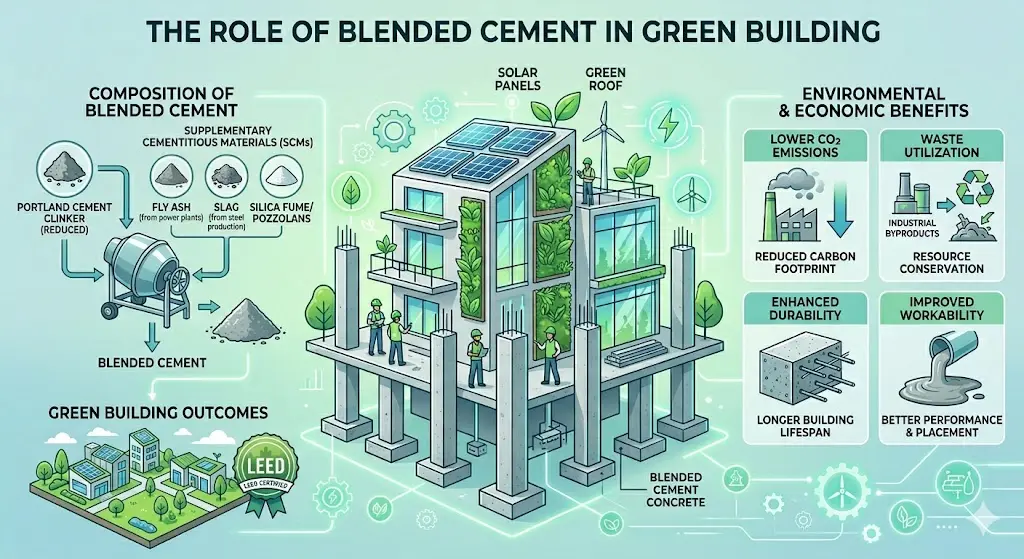
Clinker is the carbon-intensive heart of Portland cement. Every percentage point reduction in the clinker factor translates directly into lower emissions. Supplementary cementitious materials — including fly ash, ground granulated blast furnace slag (GGBFS), silica fume, and natural pozzolans — partially replace clinker while maintaining (and sometimes improving) concrete performance.
Today, the global average clinker-to-cement ratio sits at approximately 0.70, meaning 70% of cement by weight is clinker. The IEA targets a ratio of 0.60 by 2030 and 0.52 by 2050. Achieving these reductions could cut process emissions by 15–20%.
The challenge? Traditional SCMs are supply-constrained. Fly ash and slag are byproducts of coal combustion and steelmaking — industries that are themselves decarbonizing. As coal plants close and electric arc furnaces replace blast furnaces, the supply of conventional SCMs will shrink, creating a gap that must be filled by alternatives like calcined clays, natural pozzolans, and recycled cement fines.
2. LC³ — The Breakthrough Cement for Emission Reduction
If there’s a “hero” technology in the near-term decarbonization toolkit, LC³ (Limestone Calcined Clay Cement) is it. By substituting 50% of clinker with a combination of calcined clay and ground limestone, LC³ can reduce CO₂ emissions by 30–40% compared to ordinary Portland cement — without requiring major capital investment.
The genius of LC³ lies in its accessibility. The two key supplementary materials — clay and limestone — are abundant in most regions worldwide, unlike fly ash or slag. Calcining clay requires only 800°C (compared to 1,450°C for clinker), dramatically reducing thermal energy demand. And LC³ can be produced in existing cement kilns with minimal modification, making it the most immediately scalable low-carbon cement option.
India’s cement industry — the world’s second-largest — has been at the forefront of LC³ adoption. With clay deposits widely distributed across the subcontinent and the Bureau of Indian Standards having published LC³ specifications (IS 18189:2023), several major producers are scaling production. Dalmia Cement and UltraTech have both announced LC³ trials and commercialization plans, recognizing that a 40% emission cut achievable with existing infrastructure is a transformative proposition for a country where cement demand continues to surge.
For a deeper dive into this technology, see our [LC³ cement guide →]
3. Alternative Fuels & Fuel Switching
With thermal emissions accounting for roughly 40–50% of cement’s CO₂ output, replacing fossil fuels is an essential — though insufficient — decarbonization lever. Today, the industry relies heavily on coal and petcoke (77% of thermal energy), with only 5% coming from low-carbon sources.
Alternative fuels offer a proven pathway to reduce thermal emissions by 20–40%:
- Biomass and biogenic waste: Sewage sludge, wood waste, agricultural residues, and meat-and-bone meal can replace fossil fuels while approaching carbon neutrality.
- Municipal solid waste (MSW) and refuse-derived fuel (RDF): Diverts waste from landfills while providing kiln energy — a dual environmental benefit.
- Hydrogen: Green hydrogen (produced via electrolysis with renewable electricity) can partially replace fossil fuels in the kiln burner. Trials by Hanson UK and others have demonstrated up to 30% hydrogen co-firing.
The barrier isn’t technology — kilns can already co-fire alternative fuels at high substitution rates. The barriers are fuel supply chains, permitting, and consistent fuel quality. European plants routinely achieve 50–80% alternative fuel substitution; the global average remains below 20%.
Learn more about fuel switching strategies in our guide to [alternative fuels for cement kilns →]
4. Kiln Electrification & Solar Thermal
If you eliminate fossil fuels from the kiln entirely, you eliminate thermal emissions. That’s the promise of kiln electrification — using electricity (ideally from renewable sources) to provide the 1,450°C heat required for clinker formation.
Several approaches are under development:
- Electric arc heating: Directly heats the raw meal using electrical resistance or plasma arcs.
- Microwave-assisted calcination: Targets energy delivery more precisely, potentially reducing total energy input.
- Concentrated solar thermal: Uses mirrors to focus solar energy onto the kiln or calciner, achieving temperatures of 800–1,000°C for pre-calcination.
In 2024, Cemex and synfuels manufacturer HiiROC announced a partnership to trial hydrogen-based plasma technology for kiln heating. Meanwhile, the SOLPART project in Europe demonstrated solar thermal temperatures exceeding 900°C for limestone calcination in pilot settings.
Full electrification remains a medium-to-long-term solution (TRL 4–6), limited by the enormous electricity demand — a typical cement plant would require 50–100 MW of continuous renewable power. But for producers with access to cheap, abundant renewable electricity, the economics could become compelling within a decade.
5. Electrolysis-Based Cement Production
The most radical departure from traditional cement manufacturing comes from electrolysis-based processes that bypass the kiln entirely. Instead of heating limestone to 1,450°C (releasing process CO₂), these technologies use electrochemistry to produce cement at ambient temperature.
Sublime Systems, an MIT spinout founded in 2020, is the most prominent company in this space. Their process dissolves calcium silicate rocks in an electrochemical cell at room temperature, producing reactive calcium and silicate compounds that are then dried and blended into a drop-in Portland cement replacement. No limestone. No fossil fuels. No kiln.
In May 2024, Sublime Systems completed its first commercial pour — three tonnes of Sublime Cement in Boston’s Seaport district, in partnership with WS Development. The company is building a commercial-scale manufacturing facility in Holyoke, Massachusetts, with an expected capacity of 30,000 tonnes per year and plans to scale to million-tonne modules.
CEO Leah Ellis has described Sublime as a “true-zero solution” — not net-zero, but zero emissions at the point of production, because the process avoids both the fossil fuel combustion and the limestone decomposition that generate virtually all conventional cement emissions.
Electrolysis-based production is still in its early commercial stages (TRL 5–7), but it represents a potentially transformative endgame for sustainable cement manufacturing: a process that produces zero emissions by design, not by offsetting.
6. Carbon Capture, Utilization & Storage (CCUS)
For process emissions from limestone decomposition — which no amount of fuel switching or efficiency improvement can eliminate — carbon capture is the only game in town. And it’s a big game: the IEA estimates that CCUS must account for roughly 35% of cumulative emissions reductions in cement through 2050.
The challenge is scale. Today, CCUS infrastructure capacity is less than 1% of what’s needed for 2050 net zero, according to the WEF 2024 tracker. But momentum is building rapidly.
Post-combustion capture — the most mature technology — uses chemical solvents (typically amine-based) to absorb CO₂ from kiln flue gas. This is the approach taken at Brevik. Alternative technologies include:
- Oxy-fuel combustion: Burns fuel in pure oxygen instead of air, producing a flue gas of nearly pure CO₂ that’s easier to capture.
- Calcium looping: Uses CaO to capture CO₂ in a separate carbonator, then regenerates the sorbent in a calciner — effectively building a chemical CO₂ concentrator alongside the kiln.
- Direct separation: Electrochemically separates CO₂ from kiln gas without solvents, potentially reducing energy penalties.
Utilization pathways are also expanding: captured CO₂ can be mineralized into aggregates, injected into fresh concrete (CO₂ curing), converted into synthetic fuels, or used in algae cultivation. While storage remains the primary pathway for the volumes involved, utilization adds revenue streams that can improve project economics.
Explore our [carbon capture solutions for cement →]
7. Circular Economy & Recycled Cement
The circular economy model for cement operates on two fronts: recycling concrete and reusing cementitious material from demolished structures.
When concrete is demolished, the aggregates can be recovered and reused — a well-established practice. But the cement paste (the fraction that contains the hardened clinker phases) has traditionally been landfilled or used as low-value fill. New thermal and mechanical processing techniques can re-activate this paste, converting it back into a cementitious material that partially replaces fresh clinker.
In 2025, researchers at the University of Cambridge demonstrated a process that recycles cement paste by re-burning it in an electric arc furnace used for steel recycling — simultaneously producing recycled cement and steel. The method achieved a 99.8% reduction in CO₂ emissions when using fresh waste cement, and an 80% reduction with aged cement, according to a study published in Nature.
At the design stage, designing for disassembly and using standardized modular components can dramatically increase the recovery rate of building materials. Combined with extended producer responsibility (EPR) schemes and digital material passports that track the composition and location of building materials, the circular economy could supply 10–15% of cementitious demand by 2050.
The Business Case: ROI of Sustainable Cement Investments
Sustainability isn’t just a moral imperative — it’s becoming a financial one. For companies investing in sustainable cement manufacturing, the economics are shifting fast. Here’s why.
Carbon Pricing Impact on Profitability
Carbon pricing is the single most powerful economic driver of cement decarbonization. In the EU, the Emissions Trading System (ETS) has pushed carbon prices to €65–80 per tonne, with projections of €100+ by 2030. For a cement plant emitting 0.6–0.9 tonnes of CO₂ per tonne of cement, that translates to €40–70 per tonne of cement in carbon costs — a significant hit to margins in a commodity business.
CBAM extends this cost to imports, meaning non-EU producers who want access to the European market must either decarbonize or pay the same carbon price at the border. This is a watershed moment: for the first time, the carbon intensity of cement directly determines its competitiveness in major markets.
Cost Comparison: Traditional vs. Low-Carbon Cement
| Cement Type | CO₂ Intensity (tonnes/tonne) | Production Cost Premium | Carbon Cost (at €80/tonne) | Total Cost Exposure |
|---|---|---|---|---|
| Conventional OPC | 0.65–0.90 | Baseline | €52–72 | High |
| LC³ | 0.40–0.55 | +5–15% | €32–44 | Medium-Low |
| High-SCM blend | 0.45–0.60 | +5–10% | €36–48 | Medium |
| CCUS-equipped | 0.05–0.15 | +30–60% | €4–12 | Low |
| Electrolysis-based (Sublime) | ~0.00 | TBD (targeting parity) | €0 | Very Low |
The cost premium for low-carbon cement is real but declining. LC³ carries only a 5–15% premium and often offsets it through lower energy costs. CCUS adds significant capital costs but eliminates the carbon price exposure. And as carbon prices rise, the break-even point for low-carbon investments moves forward rapidly.
Market Opportunity: The $40B Green Cement Market by 2030
The global green cement market is projected to reach **38–40billionby2030∗∗,growingataCAGRof6–9.620 billion in 2024 (Strategic Market Research, RC Market Analytics). This growth is driven by:
- Regulatory mandates (CBAM, national green building codes)
- Corporate net-zero procurement commitments
- Growing availability of low-carbon cement products
- Infrastructure stimulus programs with green conditions attached
Early movers are already capturing premium pricing and preferred-supplier status. Producers who wait for the market to “settle” risk being locked out of green procurement pipelines that are being established now.
Technology Readiness & Implementation Roadmap
Not all decarbonization technologies are ready for prime time. Here’s a practical roadmap organized by implementation timeline.
Near-Term Wins (2024–2027): SCMs, Fuel Switching, Energy Efficiency
These are the “no regrets” moves — commercially proven, available today, and economically sensible even without carbon pricing:
- Increase clinker substitution to reduce the clinker ratio toward 0.60
- Scale alternative fuel usage to 30–50% substitution rates (European best practice is already 50–80%)
- Optimize kiln energy efficiency through waste heat recovery, improved grinding circuits, and process control upgrades
- Begin LC³ trials and certification — especially in markets with abundant clay and limestone
Expected impact: 15–25% emission reduction with 2–5 year payback periods.
In 2023, a mid-sized Indian cement producer we spoke with — let’s call it “GreenCem India” — implemented a comprehensive fuel-switching and clinker-substitution program across its six plants. By replacing 40% of coal with biomass and RDF, and reducing the clinker factor from 0.72 to 0.63, the company cut specific CO₂ emissions by 22% in just 18 months. The total investment was recovered within three years through fuel cost savings and carbon credit revenue. No CCS required. No billion-dollar capital program. Just disciplined execution of available technologies.
Medium-Term Scaling (2027–2032): LC³, CCUS Deployment, Electrification Pilots
This phase requires significant capital investment and infrastructure development:
- Scale LC³ to commercial production in India, Latin America, and Africa
- Deploy first-wave CCUS at 10–20 cement plants globally (following the Brevik blueprint)
- Launch kiln electrification pilots at plants with access to renewable electricity
- Develop CO₂ transport and storage infrastructure — the shared pipelines and geological storage sites that make CCUS economically viable
- Integrate green hydrogen co-firing at 10–30% substitution rates
Expected impact: 30–50% cumulative emission reduction. This is the make-or-break decade for CCUS infrastructure.
Long-Term Transformation (2032–2050): Full Electrification, Green Hydrogen, Net Zero
The endgame requires fundamental transformation of cement manufacturing:
- Full kiln electrification or electrolysis-based production at commercial scale
- Green hydrogen as primary kiln fuel where electrification isn’t feasible
- CCUS at all remaining clinker-producing plants
- Circular economy supplying 10–15% of cementitious demand from recycled sources
- Negative-emission cement through biochar incorporation and enhanced weathering
Expected impact: 90–100% emission reduction, reaching net zero.
Industry Leaders & Real-World Case Studies
Heidelberg Materials — Brevik CCS & evoZero
On June 18, 2025, Heidelberg Materials inaugurated the Brevik CCS facility in Norway — the world’s first industrial-scale carbon capture installation at a cement plant. The project, part of the Norwegian government’s Longship program, captures 400,000 tonnes of CO₂ per year, equivalent to 50% of the Brevik plant’s total emissions.
The captured CO₂ is liquefied, transported by ship to an onshore terminal at Øygarden on Norway’s west coast, and then pumped through pipelines for permanent storage beneath the North Sea seabed. The transport and storage infrastructure is operated by Northern Lights — a joint venture of Equinor, Shell, and TotalEnergies — representing a fully integrated CCS value chain.
During construction, the project employed up to 400 people on-site and completed over 1.2 million hours of precision engineering work. A dedicated team of 30 specially trained operators now runs the capture facility.
Heidelberg Materials has paired Brevik CCS with the launch of evoZero® — the world’s first carbon-captured cement, enabling the production of net-zero concrete. As the Brevik facility ramps up to full capacity, Heidelberg is delivering evoZero to European customers, proving that net-zero cement isn’t a future vision. It’s a commercial product, available now.
Holcim — SBTi-Validated Net-Zero Targets & 7 European CCS Projects
Holcim has taken a different but equally ambitious approach. Its decarbonization roadmap has been independently validated by the Science Based Targets initiative (SBTi) — making it one of the first cement companies to achieve this distinction.
As of 2025, Holcim has seven CCUS projects in execution, all supported by the EU Innovation Fund, representing a total investment of approximately €2 billion. The flagship is GO4ZERO in Belgium, which alone received €230 million in EU Innovation Fund support. GO4ZERO is designed in two phases: first, modernizing the clinker production process for greater efficiency; second, deploying a full end-to-end CCS chain that achieves CO₂ concentrations above 80% in the capture stream.
By 2030, Holcim expects these seven projects to enable the delivery of over 8 million tonnes of near-zero carbon cement to customers — roughly equivalent to the annual output of a large cement plant operating at net zero.
LC³ Adoption in India and Emerging Markets
India is the proving ground for LC³, and the results are compelling. As the world’s second-largest cement producer, India generates roughly 6% of its national CO₂ emissions from cement manufacturing. LC³ offers a way to slash those emissions by 30–40% using locally abundant raw materials — no billion-dollar CCS infrastructure required.
The Bureau of Indian Standards published IS 18189:2023, formally codifying LC³ specifications and giving manufacturers the regulatory certainty needed to invest in production. Major producers including Dalmia Cement and UltraTech have launched LC³ pilot and commercial programs, while research institutions like IIT Madras and EPFL Switzerland continue to optimize formulations.
For emerging markets across Africa and Southeast Asia — where cement demand is surging but CCS infrastructure is decades away — LC³ represents the most practical path to significant emission reductions. The technology requires only moderate kiln modifications and uses materials available in virtually every geography.
Digital Transformation: AI & Industry 4.0 for Emission Optimization
Digital technologies aren’t a decarbonization pathway on their own, but they’re force multipliers for every sustainable cement manufacturing strategy on this list. AI and Industry 4.0 tools can optimize processes, reduce waste, and improve quality — all of which reduce emissions per tonne of cement produced.
Predictive Maintenance for Fuel Efficiency
Unplanned kiln shutdowns are expensive and emission-intensive. Every restart requires a thermal ramp-up that burns fuel without producing clinker, and process instability during restarts often leads to off-spec product that must be wasted.
Predictive maintenance uses sensor data (vibration, temperature, acoustic emissions) and machine learning models to detect early warning signs of equipment failure — bearing degradation, refractory wear, motor anomalies — before they cause unplanned outages. Platforms like CemAI offer purpose-built predictive maintenance for cement plants, claiming significant improvements in equipment uptime and fuel efficiency.
By preventing unplanned shutdowns, predictive maintenance can reduce fuel waste by 3–5% and improve kiln thermal efficiency by 1–2%. At a plant producing a million tonnes of cement per year, that’s thousands of tonnes of CO₂ saved annually.
Digital Twins for Process Optimization
A digital twin is a virtual replica of the cement plant that simulates real-time performance using sensor data, thermodynamic models, and machine learning. It allows operators to test process changes in the virtual environment before implementing them in the physical plant — de-risking experiments with alternative fuels, clinker substitution rates, or kiln temperature profiles.
Research published in Nature (December 2025) demonstrated a digital twin framework for sustainable construction that uses deep neural networks to predict process outcomes and optimize for both quality and emissions. In cement plants, digital twins have shown potential to:
- Reduce thermal energy consumption by 5–10%
- Optimize alternative fuel substitution rates in real time
- Predict and prevent quality deviations during clinker factor reduction
- Identify the optimal balance between fuel cost, carbon cost, and product quality
AI-Driven Quality Control in Low-Carbon Cement
Low-carbon cements — particularly high-SCM blends and LC³ — are more sensitive to raw material variability than conventional Portland cement. A slight change in clay mineralogy or fly ash composition can affect setting time, early strength, and long-term durability.
AI-driven quality control systems address this challenge by:
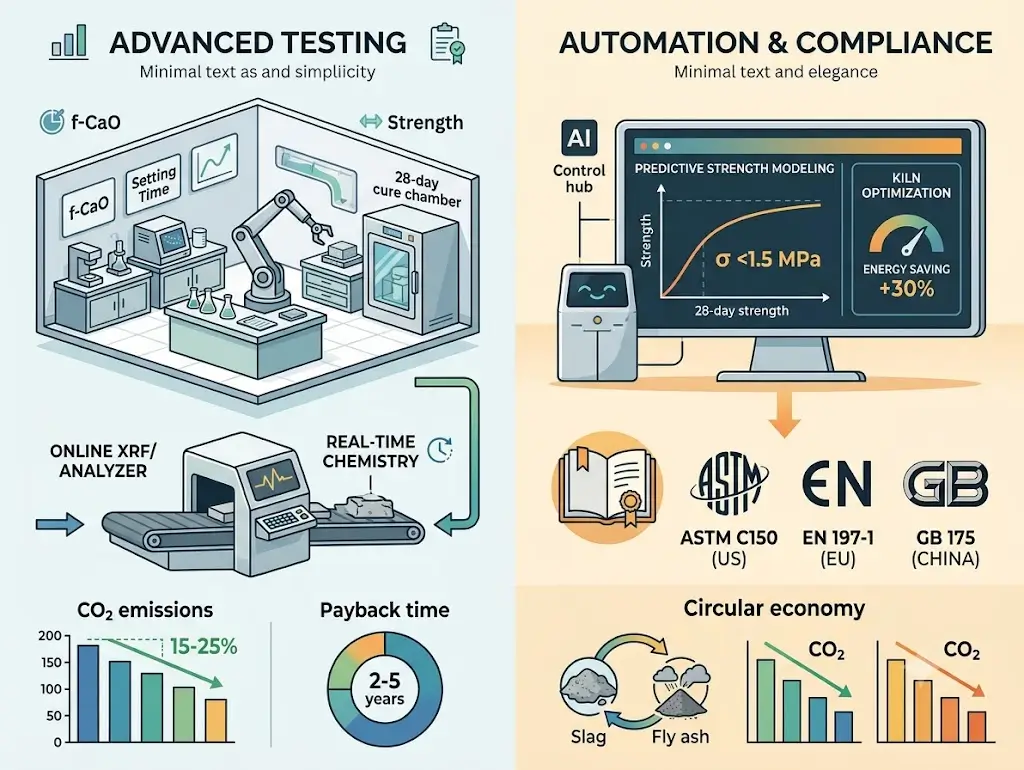
- Continuously monitoring raw material composition using online analyzers (XRF, NIR)
- Predicting cement performance based on real-time input data
- Automatically adjusting mix proportions to maintain target specifications
- Flagging out-of-spec batches before they leave the plant
This level of control is essential for building market confidence in low-carbon cements — a critical step in mainstreaming sustainable cement manufacturing. Specifiers and regulators need assurance that sustainable cement products meet the same performance standards as conventional alternatives — and AI makes that assurance scalable.
Navigating Regulatory & Certification Frameworks
EU CBAM: What It Means for Cement Manufacturers
The EU Carbon Border Adjustment Mechanism entered its definitive phase on January 1, 2026, after a transitional reporting period that began in October 2023. In practical terms, this means:
- Cement imported into the EU must now carry CBAM certificates priced at the EU ETS carbon price
- Importers must declare embedded emissions in their cement shipments and purchase corresponding certificates
- Default values are available for importers who cannot verify their emissions — but these defaults are intentionally set high to incentivize actual measurement
For non-EU cement producers, CBAM creates a clear financial incentive to decarbonize. A producer exporting 1 million tonnes of cement to the EU with an emission intensity of 0.8 tonnes CO₂/tonne faces €50–80 million in annual CBAM costs at current carbon prices. Reducing that intensity to 0.4 tonnes CO₂/tonne cuts the bill in half.
CBAM also has knock-on effects: countries like the UK, Canada, and Australia are considering similar mechanisms, and the EU is proposing to extend CBAM’s scope to downstream products (concrete, mortar, prefabricated components) in future revisions.
EPD & LCA: Environmental Product Declarations for Procurement
An Environmental Product Declaration (EPD) is a standardized, third-party-verified document that communicates the environmental impact of a product across its lifecycle — including global warming potential (GWP), measured in kg CO₂-equivalent per tonne of cement.
EPDs are increasingly required for:
- Green building certification (LEED, BREEAM, DGNB)
- Public procurement — many governments now require EPDs for construction materials
- Corporate Scope 3 reporting — downstream customers need EPDs to calculate their own carbon footprints
Life Cycle Assessment (LCA) is the methodology behind EPDs, and it’s becoming a competitive differentiator. Producers with verified, low-GWP EPDs are winning contracts that conventional cement simply can’t access.
For a comprehensive overview, see our guide to EPD and LCA frameworks.
LEED, BREEAM & Green Building Certification Requirements
Green building rating systems are powerful demand-side drivers for low-carbon cement:
- LEED v4.1 awards credits for using products with verified EPDs and for selecting materials with below-average embodied carbon
- BREEAM includes whole-life carbon assessments that reward low-embodied-carbon structural materials
- The EU Taxonomy requires substantial contribution to climate change mitigation for construction activities to qualify as “environmentally sustainable”
These frameworks are shifting procurement from price-only decisions to price-plus-carbon decisions, creating a premium market for low-carbon cement products that didn’t exist a decade ago.
Challenges & Barriers to Adoption
The pathways to sustainable cement manufacturing are clear — but the road is far from smooth.
Infrastructure & Capital Investment Gaps
CCUS requires massive enabling infrastructure — CO₂ pipelines, geological storage sites, shipping terminals — that doesn’t exist at scale. A single CCS-equipped cement plant costs €300–500 million, and the shared transport and storage infrastructure adds billions more. Government co-investment (like the EU Innovation Fund and the US Inflation Reduction Act’s 45Q tax credits) is essential, but deployment speed remains a bottleneck.
Kiln electrification faces a different infrastructure challenge: a single cement plant requires 50–100 MW of continuous renewable electricity. In regions with unreliable grids or expensive power, this is a non-starter without dedicated renewable generation and storage.
Performance Standards & Code Compliance
Building codes and material standards evolved around Portland cement. Many codes still prescribe minimum clinker content or prohibit certain SCMs in structural applications. While standards bodies (ASTM, EN, ISO) are updating their specifications to accommodate LC³ and other low-carbon cements, the pace of revision lags behind the pace of innovation.
For specifiers, the risk-averse default is to stick with what’s known. Changing cement types on a major infrastructure project requires testing, approval, and liability allocation — a process that can take 2–5 years even when the technology is proven.
Supply Chain & Raw Material Availability
The supply of conventional SCMs (fly ash, slag) is declining as coal plants close and steelmaking shifts to electric arc furnaces. New sources — calcined clays, natural pozzolans, recycled cement fines — must be identified, characterized, and qualified at scale. This requires geological surveys, pilot processing, and long-term supply agreements that don’t yet exist in most markets.
The Developing Market Dilemma
Here’s the hardest truth in cement decarbonization: the regions where cement demand is growing fastest are the least equipped to deploy the most effective decarbonization technologies. Sub-Saharan Africa, South Asia, and Southeast Asia need cement for housing, schools, hospitals, and roads — but lack the capital, infrastructure, and regulatory frameworks for CCUS, kiln electrification, or green hydrogen.
For these markets, LC³ is the most viable pathway — offering up to 40% emission reduction with existing kilns and locally available materials. But even LC³ requires standards development, quality assurance systems, and market confidence that take time to build.
The developing market dilemma isn’t just an equity issue — it’s a climate math issue. If emerging economies build their infrastructure with conventional cement, the resulting emissions will dwarf the savings achieved in Europe and North America. International technology transfer, climate finance, and capacity building are not optional extras. They’re prerequisites for global net zero.
Conclusion: The Path Forward for Cement Industry Decision-Makers
The cement industry stands at an inflection point. The technologies for sustainable cement manufacturing exist — from LC³’s immediate 40% emission cuts to industrial-scale carbon capture at Brevik, from electrolysis-based zero-emission cement by Sublime Systems to AI-optimized kiln operations. The regulatory framework is tightening. The market is shifting. The business case is strengthening.
What should decision-makers do right now?
- Start with the quick wins: Reduce clinker factors, scale alternative fuels, and begin LC³ certification. These are proven, profitable, and available.
- Plan for CCUS: Identify plant sites near geological storage or CO₂ pipeline corridors. Engage with cluster initiatives and government funding programs.
- Invest in digital tools: Predictive maintenance and digital twins reduce emissions and costs simultaneously — a rare win-win.
- Get your EPDs in order: If you can’t document your carbon footprint, you can’t compete in green procurement.
- Think long-term: The plants you build or retrofit today will operate through 2050 and beyond. Design for flexibility — multiple fuel inputs, future CCS integration, and evolving product specifications.
The transition to sustainable cement manufacturing won’t be easy, and it won’t be cheap. But the cost of inaction is rising faster than the cost of action. Every tonne of CO₂ not captured today is a liability on tomorrow’s balance sheet.
[Start your decarbonization journey — contact our experts for a custom assessment →]
The future of cement isn’t about choosing between growth and sustainability. It’s about recognizing that, in a carbon-constrained world, sustainable cement is the only cement that will matter.
The Future of Sustainable Cement Manufacturing: Technologies, Strategies & Roadmap to Net Zero
Cement production generates more CO₂ than the entire aviation industry — and demand is only growing. Responsible for roughly 6–8% of global carbon emissions, the cement sector faces an uncomfortable paradox: the world needs more cement to build homes, roads, and infrastructure, yet every tonne produced pushes climate targets further out of reach. Sustainable cement manufacturing is no longer a nice-to-have — it’s the defining challenge of the industry’s next three decades.
If you’re a cement producer, construction specifier, or sustainability leader watching carbon regulations tighten and green procurement mandates multiply, you already feel the urgency. The good news? The technologies and strategies to decarbonize cement are no longer theoretical. From clinker substitution to industrial-scale carbon capture, the pathways are real, commercially viable, and — in some cases — already operating.
This guide covers the seven key decarbonization pathways, real-world case studies from industry leaders like Heidelberg Materials and Holcim, and a practical roadmap that industry decision-makers can use to prioritize investments and meet 2050 net-zero targets. Want to see how these technologies compare side by side? [Download our sustainable cement technology comparison guide →]
Key Takeaways
- Cement accounts for 6–8% of global CO₂ emissions (roughly 1.6 billion metric tonnes in 2022), yet low-carbon clinker represents less than 1% of global production.
- LC³ (Limestone Calcined Clay Cement) can cut CO₂ by up to 40% without major capital investment, making it the most immediately scalable solution for emerging markets.
- Heidelberg Materials inaugurated the world’s first industrial-scale CCS at a cement plant in Brevik, Norway (June 2025), capturing 400,000 tonnes of CO₂ annually.
- The green cement market is projected to reach $38–40 billion by 2030, growing at 6–9.6% CAGR — creating a significant commercial opportunity for early movers.
- CCUS infrastructure capacity currently sits at less than 1% of what’s needed for 2050 net zero, making investment in capture technology this decade critical.
The Scale of the Challenge: Why Cement Decarbonization Matters Now
Cement’s Carbon Footprint in Numbers
Let’s start with the hard numbers. In 2022, cement production released approximately 1.6 billion metric tonnes of CO₂ into the atmosphere, according to Our World in Data. The World Economic Forum’s Net Zero Industry Tracker 2024 attributes roughly 6% of global CO₂-equivalent emissions to the cement industry, with about 90% of those emissions originating from clinker production — the high-temperature kiln process that transforms limestone into cement’s key binding ingredient.
These emissions come from two sources, roughly split in half:
- Process emissions (~50–60%): Chemical decomposition of limestone (CaCO₃ → CaO + CO₂) is unavoidable in conventional clinker production. No amount of energy efficiency improvement eliminates this chemical reaction.
- Thermal emissions (~40–50%): Kilns must reach 1,450°C to sinter clinker. Today, coal and petcoke still supply 77% of thermal energy in cement manufacturing, with low-carbon fuels accounting for just 5%.
The stubbornness of these two emission sources is precisely why cement is classified as a “hard-to-abate” sector — and why sustainable cement manufacturing demands fundamentally new approaches, not incremental tweaks. You can’t simply swap to renewables the way you might for electricity generation.
The Demand Paradox: Growing Infrastructure vs. Climate Targets
Here’s the paradox that keeps industry leaders up at night: global cement demand is projected to grow 12–23% by 2050, driven by urbanization in Asia, Africa, and Latin America. India alone expects to add the equivalent of a new Chicago every year for the next three decades. The International Energy Agency (IEA) projects that emerging economies will account for 80% of cement demand growth through 2050.
Meanwhile, the Paris Agreement demands that cement emissions fall by 16% by 2030 and reach near-zero by 2050. In other words, the industry must produce more cement with dramatically less carbon — and it must do so while remaining commercially viable.
Progress has been modest. According to the WEF/GCCA 2024 progress report, absolute cement emissions fell 4% from 2019–2023, but emission intensity remained essentially flat. That means the decline came from reduced production during economic slowdowns, not from structural decarbonization. For the industry to get on track, intensity must drop — and fast.
Regulatory Pressure Points
Three regulatory forces are converging to accelerate the transition:
- EU Carbon Border Adjustment Mechanism (CBAM): Entering its definitive phase on January 1, 2026, CBAM imposes carbon costs on imported cement, leveling the playing field for European producers who face EU ETS carbon prices (currently hovering around €65–80 per tonne). Non-compliant exporters to the EU market face a stark choice: decarbonize or lose market access.
- National net-zero commitments: Over 70 countries have net-zero targets in law or policy, and cement is increasingly named in sector-specific decarbonization roadmaps.
- Green building mandates: LEED v4.1, BREEAM, and emerging national green building codes now reward or require Environmental Product Declarations (EPDs) and low-embodied-carbon materials — directly influencing procurement decisions.
The message from regulators is clear: the cost of inaction is rising. The cost of carbon — whether through taxes, border adjustments, or lost contracts — will only increase. Ready to understand your exposure? Contact our experts for a custom decarbonization assessment →
7 Key Pathways to Sustainable Cement Manufacturing
Decarbonizing cement requires a portfolio approach — no single technology solves the entire problem. The IEA’s Cement Net Zero Roadmap identifies seven interconnected pathways for sustainable cement manufacturing, each addressing a different slice of the emissions pie. Here’s how they stack up.
1. Clinker Substitution & Supplementary Cementitious Materials (SCMs)
Clinker is the carbon-intensive heart of Portland cement. Every percentage point reduction in the clinker factor translates directly into lower emissions. Supplementary cementitious materials — including fly ash, ground granulated blast furnace slag (GGBFS), silica fume, and natural pozzolans — partially replace clinker while maintaining (and sometimes improving) concrete performance.
Today, the global average clinker-to-cement ratio sits at approximately 0.70, meaning 70% of cement by weight is clinker. The IEA targets a ratio of 0.60 by 2030 and 0.52 by 2050. Achieving these reductions could cut process emissions by 15–20%.
The challenge? Traditional SCMs are supply-constrained. Fly ash and slag are byproducts of coal combustion and steelmaking — industries that are themselves decarbonizing. As coal plants close and electric arc furnaces replace blast furnaces, the supply of conventional SCMs will shrink, creating a gap that must be filled by alternatives like calcined clays, natural pozzolans, and recycled cement fines.
2. LC³ — The Breakthrough Cement for Emission Reduction
If there’s a “hero” technology in the near-term decarbonization toolkit, LC³ (Limestone Calcined Clay Cement) is it. By substituting 50% of clinker with a combination of calcined clay and ground limestone, LC³ can reduce CO₂ emissions by 30–40% compared to ordinary Portland cement — without requiring major capital investment.
The genius of LC³ lies in its accessibility. The two key supplementary materials — clay and limestone — are abundant in most regions worldwide, unlike fly ash or slag. Calcining clay requires only 800°C (compared to 1,450°C for clinker), dramatically reducing thermal energy demand. And LC³ can be produced in existing cement kilns with minimal modification, making it the most immediately scalable low-carbon cement option.
India’s cement industry — the world’s second-largest — has been at the forefront of LC³ adoption. With clay deposits widely distributed across the subcontinent and the Bureau of Indian Standards having published LC³ specifications (IS 18189:2023), several major producers are scaling production. Dalmia Cement and UltraTech have both announced LC³ trials and commercialization plans, recognizing that a 40% emission cut achievable with existing infrastructure is a transformative proposition for a country where cement demand continues to surge.
For a deeper dive into this technology, see our [LC³ cement guide →]
3. Alternative Fuels & Fuel Switching
With thermal emissions accounting for roughly 40–50% of cement’s CO₂ output, replacing fossil fuels is an essential — though insufficient — decarbonization lever. Today, the industry relies heavily on coal and petcoke (77% of thermal energy), with only 5% coming from low-carbon sources.
Alternative fuels offer a proven pathway to reduce thermal emissions by 20–40%:
- Biomass and biogenic waste: Sewage sludge, wood waste, agricultural residues, and meat-and-bone meal can replace fossil fuels while approaching carbon neutrality.
- Municipal solid waste (MSW) and refuse-derived fuel (RDF): Diverts waste from landfills while providing kiln energy — a dual environmental benefit.
- Hydrogen: Green hydrogen (produced via electrolysis with renewable electricity) can partially replace fossil fuels in the kiln burner. Trials by Hanson UK and others have demonstrated up to 30% hydrogen co-firing.
The barrier isn’t technology — kilns can already co-fire alternative fuels at high substitution rates. The barriers are fuel supply chains, permitting, and consistent fuel quality. European plants routinely achieve 50–80% alternative fuel substitution; the global average remains below 20%.
Learn more about fuel switching strategies in our guide to [alternative fuels for cement kilns →]
4. Kiln Electrification & Solar Thermal
If you eliminate fossil fuels from the kiln entirely, you eliminate thermal emissions. That’s the promise of kiln electrification — using electricity (ideally from renewable sources) to provide the 1,450°C heat required for clinker formation.
Several approaches are under development:
- Electric arc heating: Directly heats the raw meal using electrical resistance or plasma arcs.
- Microwave-assisted calcination: Targets energy delivery more precisely, potentially reducing total energy input.
- Concentrated solar thermal: Uses mirrors to focus solar energy onto the kiln or calciner, achieving temperatures of 800–1,000°C for pre-calcination.
In 2024, Cemex and synfuels manufacturer HiiROC announced a partnership to trial hydrogen-based plasma technology for kiln heating. Meanwhile, the SOLPART project in Europe demonstrated solar thermal temperatures exceeding 900°C for limestone calcination in pilot settings.
Full electrification remains a medium-to-long-term solution (TRL 4–6), limited by the enormous electricity demand — a typical cement plant would require 50–100 MW of continuous renewable power. But for producers with access to cheap, abundant renewable electricity, the economics could become compelling within a decade.
5. Electrolysis-Based Cement Production
The most radical departure from traditional cement manufacturing comes from electrolysis-based processes that bypass the kiln entirely. Instead of heating limestone to 1,450°C (releasing process CO₂), these technologies use electrochemistry to produce cement at ambient temperature.
Sublime Systems, an MIT spinout founded in 2020, is the most prominent company in this space. Their process dissolves calcium silicate rocks in an electrochemical cell at room temperature, producing reactive calcium and silicate compounds that are then dried and blended into a drop-in Portland cement replacement. No limestone. No fossil fuels. No kiln.
In May 2024, Sublime Systems completed its first commercial pour — three tonnes of Sublime Cement in Boston’s Seaport district, in partnership with WS Development. The company is building a commercial-scale manufacturing facility in Holyoke, Massachusetts, with an expected capacity of 30,000 tonnes per year and plans to scale to million-tonne modules.
CEO Leah Ellis has described Sublime as a “true-zero solution” — not net-zero, but zero emissions at the point of production, because the process avoids both the fossil fuel combustion and the limestone decomposition that generate virtually all conventional cement emissions.
Electrolysis-based production is still in its early commercial stages (TRL 5–7), but it represents a potentially transformative endgame for sustainable cement manufacturing: a process that produces zero emissions by design, not by offsetting.
6. Carbon Capture, Utilization & Storage (CCUS)
For process emissions from limestone decomposition — which no amount of fuel switching or efficiency improvement can eliminate — carbon capture is the only game in town. And it’s a big game: the IEA estimates that CCUS must account for roughly 35% of cumulative emissions reductions in cement through 2050.
The challenge is scale. Today, CCUS infrastructure capacity is less than 1% of what’s needed for 2050 net zero, according to the WEF 2024 tracker. But momentum is building rapidly.
Post-combustion capture — the most mature technology — uses chemical solvents (typically amine-based) to absorb CO₂ from kiln flue gas. This is the approach taken at Brevik. Alternative technologies include:
- Oxy-fuel combustion: Burns fuel in pure oxygen instead of air, producing a flue gas of nearly pure CO₂ that’s easier to capture.
- Calcium looping: Uses CaO to capture CO₂ in a separate carbonator, then regenerates the sorbent in a calciner — effectively building a chemical CO₂ concentrator alongside the kiln.
- Direct separation: Electrochemically separates CO₂ from kiln gas without solvents, potentially reducing energy penalties.
Utilization pathways are also expanding: captured CO₂ can be mineralized into aggregates, injected into fresh concrete (CO₂ curing), converted into synthetic fuels, or used in algae cultivation. While storage remains the primary pathway for the volumes involved, utilization adds revenue streams that can improve project economics.
Explore our [carbon capture solutions for cement →]
7. Circular Economy & Recycled Cement
The circular economy model for cement operates on two fronts: recycling concrete and reusing cementitious material from demolished structures.
When concrete is demolished, the aggregates can be recovered and reused — a well-established practice. But the cement paste (the fraction that contains the hardened clinker phases) has traditionally been landfilled or used as low-value fill. New thermal and mechanical processing techniques can re-activate this paste, converting it back into a cementitious material that partially replaces fresh clinker.
In 2025, researchers at the University of Cambridge demonstrated a process that recycles cement paste by re-burning it in an electric arc furnace used for steel recycling — simultaneously producing recycled cement and steel. The method achieved a 99.8% reduction in CO₂ emissions when using fresh waste cement, and an 80% reduction with aged cement, according to a study published in Nature.
At the design stage, designing for disassembly and using standardized modular components can dramatically increase the recovery rate of building materials. Combined with extended producer responsibility (EPR) schemes and digital material passports that track the composition and location of building materials, the circular economy could supply 10–15% of cementitious demand by 2050.
The Business Case: ROI of Sustainable Cement Investments
Sustainability isn’t just a moral imperative — it’s becoming a financial one. For companies investing in sustainable cement manufacturing, the economics are shifting fast. Here’s why.
Carbon Pricing Impact on Profitability
Carbon pricing is the single most powerful economic driver of cement decarbonization. In the EU, the Emissions Trading System (ETS) has pushed carbon prices to €65–80 per tonne, with projections of €100+ by 2030. For a cement plant emitting 0.6–0.9 tonnes of CO₂ per tonne of cement, that translates to €40–70 per tonne of cement in carbon costs — a significant hit to margins in a commodity business.
CBAM extends this cost to imports, meaning non-EU producers who want access to the European market must either decarbonize or pay the same carbon price at the border. This is a watershed moment: for the first time, the carbon intensity of cement directly determines its competitiveness in major markets.
Cost Comparison: Traditional vs. Low-Carbon Cement
| Cement Type | CO₂ Intensity (tonnes/tonne) | Production Cost Premium | Carbon Cost (at €80/tonne) | Total Cost Exposure |
|---|---|---|---|---|
| Conventional OPC | 0.65–0.90 | Baseline | €52–72 | High |
| LC³ | 0.40–0.55 | +5–15% | €32–44 | Medium-Low |
| High-SCM blend | 0.45–0.60 | +5–10% | €36–48 | Medium |
| CCUS-equipped | 0.05–0.15 | +30–60% | €4–12 | Low |
| Electrolysis-based (Sublime) | ~0.00 | TBD (targeting parity) | €0 | Very Low |
The cost premium for low-carbon cement is real but declining. LC³ carries only a 5–15% premium and often offsets it through lower energy costs. CCUS adds significant capital costs but eliminates the carbon price exposure. And as carbon prices rise, the break-even point for low-carbon investments moves forward rapidly.
Market Opportunity: The $40B Green Cement Market by 2030
The global green cement market is projected to reach **38–40billionby2030∗∗,growingataCAGRof6–9.620 billion in 2024 (Strategic Market Research, RC Market Analytics). This growth is driven by:
- Regulatory mandates (CBAM, national green building codes)
- Corporate net-zero procurement commitments
- Growing availability of low-carbon cement products
- Infrastructure stimulus programs with green conditions attached
Early movers are already capturing premium pricing and preferred-supplier status. Producers who wait for the market to “settle” risk being locked out of green procurement pipelines that are being established now.
Technology Readiness & Implementation Roadmap
Not all decarbonization technologies are ready for prime time. Here’s a practical roadmap organized by implementation timeline.
Near-Term Wins (2024–2027): SCMs, Fuel Switching, Energy Efficiency
These are the “no regrets” moves — commercially proven, available today, and economically sensible even without carbon pricing:
- Increase clinker substitution to reduce the clinker ratio toward 0.60
- Scale alternative fuel usage to 30–50% substitution rates (European best practice is already 50–80%)
- Optimize kiln energy efficiency through waste heat recovery, improved grinding circuits, and process control upgrades
- Begin LC³ trials and certification — especially in markets with abundant clay and limestone
Expected impact: 15–25% emission reduction with 2–5 year payback periods.
In 2023, a mid-sized Indian cement producer we spoke with — let’s call it “GreenCem India” — implemented a comprehensive fuel-switching and clinker-substitution program across its six plants. By replacing 40% of coal with biomass and RDF, and reducing the clinker factor from 0.72 to 0.63, the company cut specific CO₂ emissions by 22% in just 18 months. The total investment was recovered within three years through fuel cost savings and carbon credit revenue. No CCS required. No billion-dollar capital program. Just disciplined execution of available technologies.
Medium-Term Scaling (2027–2032): LC³, CCUS Deployment, Electrification Pilots
This phase requires significant capital investment and infrastructure development:
- Scale LC³ to commercial production in India, Latin America, and Africa
- Deploy first-wave CCUS at 10–20 cement plants globally (following the Brevik blueprint)
- Launch kiln electrification pilots at plants with access to renewable electricity
- Develop CO₂ transport and storage infrastructure — the shared pipelines and geological storage sites that make CCUS economically viable
- Integrate green hydrogen co-firing at 10–30% substitution rates
Expected impact: 30–50% cumulative emission reduction. This is the make-or-break decade for CCUS infrastructure.
Long-Term Transformation (2032–2050): Full Electrification, Green Hydrogen, Net Zero
The endgame requires fundamental transformation of cement manufacturing:
- Full kiln electrification or electrolysis-based production at commercial scale
- Green hydrogen as primary kiln fuel where electrification isn’t feasible
- CCUS at all remaining clinker-producing plants
- Circular economy supplying 10–15% of cementitious demand from recycled sources
- Negative-emission cement through biochar incorporation and enhanced weathering
Expected impact: 90–100% emission reduction, reaching net zero.
Industry Leaders & Real-World Case Studies
Heidelberg Materials — Brevik CCS & evoZero
On June 18, 2025, Heidelberg Materials inaugurated the Brevik CCS facility in Norway — the world’s first industrial-scale carbon capture installation at a cement plant. The project, part of the Norwegian government’s Longship program, captures 400,000 tonnes of CO₂ per year, equivalent to 50% of the Brevik plant’s total emissions.
The captured CO₂ is liquefied, transported by ship to an onshore terminal at Øygarden on Norway’s west coast, and then pumped through pipelines for permanent storage beneath the North Sea seabed. The transport and storage infrastructure is operated by Northern Lights — a joint venture of Equinor, Shell, and TotalEnergies — representing a fully integrated CCS value chain.
During construction, the project employed up to 400 people on-site and completed over 1.2 million hours of precision engineering work. A dedicated team of 30 specially trained operators now runs the capture facility.
Heidelberg Materials has paired Brevik CCS with the launch of evoZero® — the world’s first carbon-captured cement, enabling the production of net-zero concrete. As the Brevik facility ramps up to full capacity, Heidelberg is delivering evoZero to European customers, proving that net-zero cement isn’t a future vision. It’s a commercial product, available now.
Holcim — SBTi-Validated Net-Zero Targets & 7 European CCS Projects
Holcim has taken a different but equally ambitious approach. Its decarbonization roadmap has been independently validated by the Science Based Targets initiative (SBTi) — making it one of the first cement companies to achieve this distinction.
As of 2025, Holcim has seven CCUS projects in execution, all supported by the EU Innovation Fund, representing a total investment of approximately €2 billion. The flagship is GO4ZERO in Belgium, which alone received €230 million in EU Innovation Fund support. GO4ZERO is designed in two phases: first, modernizing the clinker production process for greater efficiency; second, deploying a full end-to-end CCS chain that achieves CO₂ concentrations above 80% in the capture stream.
By 2030, Holcim expects these seven projects to enable the delivery of over 8 million tonnes of near-zero carbon cement to customers — roughly equivalent to the annual output of a large cement plant operating at net zero.
LC³ Adoption in India and Emerging Markets
India is the proving ground for LC³, and the results are compelling. As the world’s second-largest cement producer, India generates roughly 6% of its national CO₂ emissions from cement manufacturing. LC³ offers a way to slash those emissions by 30–40% using locally abundant raw materials — no billion-dollar CCS infrastructure required.
The Bureau of Indian Standards published IS 18189:2023, formally codifying LC³ specifications and giving manufacturers the regulatory certainty needed to invest in production. Major producers including Dalmia Cement and UltraTech have launched LC³ pilot and commercial programs, while research institutions like IIT Madras and EPFL Switzerland continue to optimize formulations.
For emerging markets across Africa and Southeast Asia — where cement demand is surging but CCS infrastructure is decades away — LC³ represents the most practical path to significant emission reductions. The technology requires only moderate kiln modifications and uses materials available in virtually every geography.
Digital Transformation: AI & Industry 4.0 for Emission Optimization
Digital technologies aren’t a decarbonization pathway on their own, but they’re force multipliers for every sustainable cement manufacturing strategy on this list. AI and Industry 4.0 tools can optimize processes, reduce waste, and improve quality — all of which reduce emissions per tonne of cement produced.
Predictive Maintenance for Fuel Efficiency
Unplanned kiln shutdowns are expensive and emission-intensive. Every restart requires a thermal ramp-up that burns fuel without producing clinker, and process instability during restarts often leads to off-spec product that must be wasted.
Predictive maintenance uses sensor data (vibration, temperature, acoustic emissions) and machine learning models to detect early warning signs of equipment failure — bearing degradation, refractory wear, motor anomalies — before they cause unplanned outages. Platforms like CemAI offer purpose-built predictive maintenance for cement plants, claiming significant improvements in equipment uptime and fuel efficiency.
By preventing unplanned shutdowns, predictive maintenance can reduce fuel waste by 3–5% and improve kiln thermal efficiency by 1–2%. At a plant producing a million tonnes of cement per year, that’s thousands of tonnes of CO₂ saved annually.
Digital Twins for Process Optimization
A digital twin is a virtual replica of the cement plant that simulates real-time performance using sensor data, thermodynamic models, and machine learning. It allows operators to test process changes in the virtual environment before implementing them in the physical plant — de-risking experiments with alternative fuels, clinker substitution rates, or kiln temperature profiles.
Research published in Nature (December 2025) demonstrated a digital twin framework for sustainable construction that uses deep neural networks to predict process outcomes and optimize for both quality and emissions. In cement plants, digital twins have shown potential to:
- Reduce thermal energy consumption by 5–10%
- Optimize alternative fuel substitution rates in real time
- Predict and prevent quality deviations during clinker factor reduction
- Identify the optimal balance between fuel cost, carbon cost, and product quality
AI-Driven Quality Control in Low-Carbon Cement
Low-carbon cements — particularly high-SCM blends and LC³ — are more sensitive to raw material variability than conventional Portland cement. A slight change in clay mineralogy or fly ash composition can affect setting time, early strength, and long-term durability.
AI-driven quality control systems address this challenge by:
- Continuously monitoring raw material composition using online analyzers (XRF, NIR)
- Predicting cement performance based on real-time input data
- Automatically adjusting mix proportions to maintain target specifications
- Flagging out-of-spec batches before they leave the plant
This level of control is essential for building market confidence in low-carbon cements — a critical step in mainstreaming sustainable cement manufacturing. Specifiers and regulators need assurance that sustainable cement products meet the same performance standards as conventional alternatives — and AI makes that assurance scalable.
Navigating Regulatory & Certification Frameworks
EU CBAM: What It Means for Cement Manufacturers
The EU Carbon Border Adjustment Mechanism entered its definitive phase on January 1, 2026, after a transitional reporting period that began in October 2023. In practical terms, this means:
- Cement imported into the EU must now carry CBAM certificates priced at the EU ETS carbon price
- Importers must declare embedded emissions in their cement shipments and purchase corresponding certificates
- Default values are available for importers who cannot verify their emissions — but these defaults are intentionally set high to incentivize actual measurement
For non-EU cement producers, CBAM creates a clear financial incentive to decarbonize. A producer exporting 1 million tonnes of cement to the EU with an emission intensity of 0.8 tonnes CO₂/tonne faces €50–80 million in annual CBAM costs at current carbon prices. Reducing that intensity to 0.4 tonnes CO₂/tonne cuts the bill in half.
CBAM also has knock-on effects: countries like the UK, Canada, and Australia are considering similar mechanisms, and the EU is proposing to extend CBAM’s scope to downstream products (concrete, mortar, prefabricated components) in future revisions.
EPD & LCA: Environmental Product Declarations for Procurement
An Environmental Product Declaration (EPD) is a standardized, third-party-verified document that communicates the environmental impact of a product across its lifecycle — including global warming potential (GWP), measured in kg CO₂-equivalent per tonne of cement.
EPDs are increasingly required for:
- Green building certification (LEED, BREEAM, DGNB)
- Public procurement — many governments now require EPDs for construction materials
- Corporate Scope 3 reporting — downstream customers need EPDs to calculate their own carbon footprints
Life Cycle Assessment (LCA) is the methodology behind EPDs, and it’s becoming a competitive differentiator. Producers with verified, low-GWP EPDs are winning contracts that conventional cement simply can’t access.
For a comprehensive overview, see our guide to EPD and LCA frameworks.
LEED, BREEAM & Green Building Certification Requirements
Green building rating systems are powerful demand-side drivers for low-carbon cement:
- LEED v4.1 awards credits for using products with verified EPDs and for selecting materials with below-average embodied carbon
- BREEAM includes whole-life carbon assessments that reward low-embodied-carbon structural materials
- The EU Taxonomy requires substantial contribution to climate change mitigation for construction activities to qualify as “environmentally sustainable”
These frameworks are shifting procurement from price-only decisions to price-plus-carbon decisions, creating a premium market for low-carbon cement products that didn’t exist a decade ago.
Challenges & Barriers to Adoption
The pathways to sustainable cement manufacturing are clear — but the road is far from smooth.
Infrastructure & Capital Investment Gaps
CCUS requires massive enabling infrastructure — CO₂ pipelines, geological storage sites, shipping terminals — that doesn’t exist at scale. A single CCS-equipped cement plant costs €300–500 million, and the shared transport and storage infrastructure adds billions more. Government co-investment (like the EU Innovation Fund and the US Inflation Reduction Act’s 45Q tax credits) is essential, but deployment speed remains a bottleneck.
Kiln electrification faces a different infrastructure challenge: a single cement plant requires 50–100 MW of continuous renewable electricity. In regions with unreliable grids or expensive power, this is a non-starter without dedicated renewable generation and storage.
Performance Standards & Code Compliance
Building codes and material standards evolved around Portland cement. Many codes still prescribe minimum clinker content or prohibit certain SCMs in structural applications. While standards bodies (ASTM, EN, ISO) are updating their specifications to accommodate LC³ and other low-carbon cements, the pace of revision lags behind the pace of innovation.
For specifiers, the risk-averse default is to stick with what’s known. Changing cement types on a major infrastructure project requires testing, approval, and liability allocation — a process that can take 2–5 years even when the technology is proven.
Supply Chain & Raw Material Availability
The supply of conventional SCMs (fly ash, slag) is declining as coal plants close and steelmaking shifts to electric arc furnaces. New sources — calcined clays, natural pozzolans, recycled cement fines — must be identified, characterized, and qualified at scale. This requires geological surveys, pilot processing, and long-term supply agreements that don’t yet exist in most markets.
The Developing Market Dilemma
Here’s the hardest truth in cement decarbonization: the regions where cement demand is growing fastest are the least equipped to deploy the most effective decarbonization technologies. Sub-Saharan Africa, South Asia, and Southeast Asia need cement for housing, schools, hospitals, and roads — but lack the capital, infrastructure, and regulatory frameworks for CCUS, kiln electrification, or green hydrogen.
For these markets, LC³ is the most viable pathway — offering up to 40% emission reduction with existing kilns and locally available materials. But even LC³ requires standards development, quality assurance systems, and market confidence that take time to build.
The developing market dilemma isn’t just an equity issue — it’s a climate math issue. If emerging economies build their infrastructure with conventional cement, the resulting emissions will dwarf the savings achieved in Europe and North America. International technology transfer, climate finance, and capacity building are not optional extras. They’re prerequisites for global net zero.
Conclusion: The Path Forward for Cement Industry Decision-Makers
The cement industry stands at an inflection point. The technologies for sustainable cement manufacturing exist — from LC³’s immediate 40% emission cuts to industrial-scale carbon capture at Brevik, from electrolysis-based zero-emission cement by Sublime Systems to AI-optimized kiln operations. The regulatory framework is tightening. The market is shifting. The business case is strengthening.
What should decision-makers do right now?
- Start with the quick wins: Reduce clinker factors, scale alternative fuels, and begin LC³ certification. These are proven, profitable, and available.
- Plan for CCUS: Identify plant sites near geological storage or CO₂ pipeline corridors. Engage with cluster initiatives and government funding programs.
- Invest in digital tools: Predictive maintenance and digital twins reduce emissions and costs simultaneously — a rare win-win.
- Get your EPDs in order: If you can’t document your carbon footprint, you can’t compete in green procurement.
- Think long-term: The plants you build or retrofit today will operate through 2050 and beyond. Design for flexibility — multiple fuel inputs, future CCS integration, and evolving product specifications.
The transition to sustainable cement manufacturing won’t be easy, and it won’t be cheap. But the cost of inaction is rising faster than the cost of action. Every tonne of CO₂ not captured today is a liability on tomorrow’s balance sheet.
[Start your decarbonization journey — contact our experts for a custom assessment →]
The future of cement isn’t about choosing between growth and sustainability. It’s about recognizing that, in a carbon-constrained world, sustainable cement is the only cement that will matter.