

Pick the wrong mortar format and your project bleeds money — not from materials, but from waste, delays, and rework. The dry mix vs wet mortar decision affects shelf life, quality control, labor costs, and whether your crew finishes the job before the material hardens.
What You’re Actually Choosing
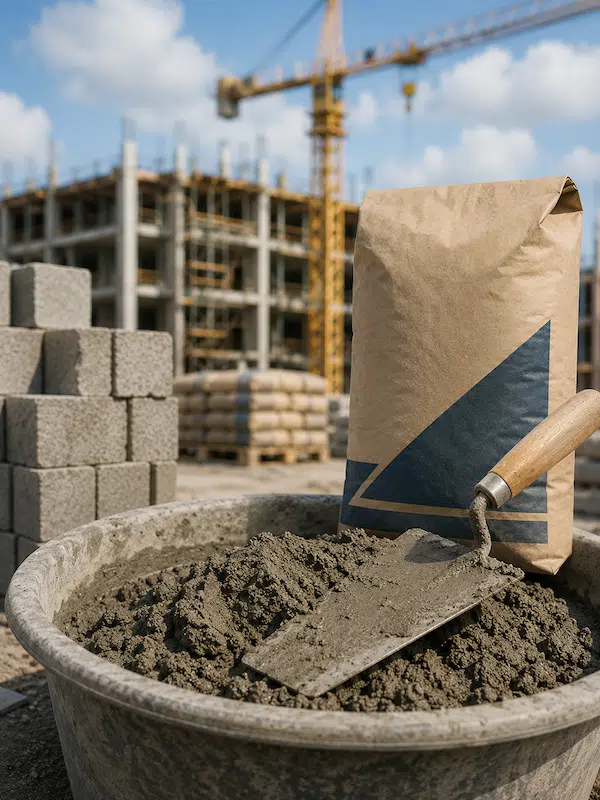
Dry mix mortar is factory-blended cement, sand, and additives in powder form — either bags or silos. Users add water on-site before application. It covers ASTM C270 Types (N, S, M, O) and also handles specialty products like tile adhesives, waterproofing renders, and thermal mortars.
Wet mix mortar comes pre-hydrated and ready to use, delivered in trucks or tubs. No on-site mixing needed. It uses the same raw materials as dry mix, but the chemical reaction between water and cement starts the moment it leaves the batching plant.
What’s Different
Dry mix mortar lasts months in storage — 6 to 12 months for polymer products, up to 365 days for standard cement-sand blends. Wet mix has to be used within 4 to 12 hours, usually closer to the 4-hour mark in real conditions. Dry mix requires water addition and mechanical mixing on-site; wet mix is ready to apply immediately. Dry mix quality is factory-tested before it ships; wet mortar quality depends on delivery timing and field conditions. For project scale, dry mix works best on smaller to medium jobs; wet mix makes sense on larger, continuous projects. Dry mix offers an extensive range of specialty products; wet mix is limited to general masonry and plastering. Waste risk is near-zero for dry mix (use what you need, store the rest), while wet mortar typically wastes 5–15% of what gets ordered. Material cost runs $5–$15 per bag for dry mix versus $100–$300 per cubic yard for wet mortar. Storage is straightforward for dry — keep it in a dry, covered area for 6–12 months. Wet mortar must be used the same day.
Cost Breakdown: Where Money Actually Goes
For small residential projects — repointing a brick wall or tiling a bathroom — dry mix wins decisively. Six bags at $9 each equals $54 in mortar. Wet mortar for the same work requires a minimum delivery order plus truck fees, often exceeding $150 before you’ve even mixed anything.
Large commercial projects shift the economics. A 1,000+ square meter job with multiple crews working simultaneously benefits from wet mortar’s continuous supply. It eliminates the mixer operator position (typically $100–$350 per day in labor savings), keeps crews focused on laying rather than mixing, and the per-cubic-yard cost drops on bulk orders.
The real money leak happens in hidden costs. Hardened wet mortar that nobody used becomes construction waste — on a typical commercial project, that’s 5–15% of everything ordered going to landfill. Then there’s rework. Mortar that was applied late or re-tempered (crews adding water to restore workability, which violates ASTM C270) produces weak joints. Fixing those joints costs 3–5 times more per square foot than getting it right the first time. Add in crew idle time — the truck arrives at 10 AM, but your crew isn’t ready until 11:30, so you’ve burned 90 minutes of usable mortar life while still paying workers standing around.
For small jobs, dry mix typically wins by 20–40% on total cost. For large continuous projects where scheduling is disciplined and waste management is handled, wet mix can win by 5–15%.
Performance & Quality: What Actually Matters
Both formats achieve identical ASTM C270/EN 998-2 specs when properly used. Type S mortar hits 1,800 psi whether it’s delivered as powder or pre-mixed.
The real-world difference: dry mix quality is locked in at the factory before it leaves. Wet mortar quality depends on field conditions. Wet mortar delayed 3+ hours in warm conditions loses 10–20% of its compressive strength compared to fresh application. With dry mix, the contractor controls water addition using a measuring container — this is measurable and repeatable. With wet mix, crews often re-temper (add water) to restore workability as it stiffens, which violates ASTM C270 and weakens strength. Factory-mixed mortar, whether dry or wet, beats on-site shovel-mixing by a huge margin. Dry mix offers cleaner documentation since it hasn’t started hydrating — test results directly show what’s in the bag.
Real Projects: What Actually Happens
Small Work with Unpredictable Schedules
Marcus, a masonry contractor in North Carolina, tried switching to wet mix in spring 2021 for what looked like efficiency. He signed a contract for twice-weekly deliveries to support five concurrent residential projects. The plan seemed solid: continuous supply, no mixing time.
Reality struck fast. The weather delayed one job. An inspection held up another. His mortar sat in an 80°F truck for three hours — workability tanked, and he discarded 30% of the load. When he did the math, wet mix actually cost more than dry mix despite the “cheaper per cubic yard” sales pitch. The waste and delivery fees killed the savings.
He switched back to keeping 20 bags of dry Type N in his truck. When the weather pauses a job, he covers it and resumes later. Same bag, zero waste. That flexibility is worth more than any per-yard price difference, because in residential work, schedules never cooperate.
Large Jobs with Tight Schedules
A UK commercial contractor switched from dry silos to ready-mix on a Leeds apartment project in 2023. The results were significant: the mixing crew (two workers) got reassigned to laying bricks, site dust dropped roughly 60%, and daily lay rates jumped about 15%.
The downside was real: the project required strict scheduling discipline. One supply delay meant waste. One missed delivery window meant rework. The contractor made it work by treating the mortar delivery like a coordinated production line — no slack, no delays.
Specialty Work
Tile adhesives, waterproofing renders, self-leveling floor screed, thermal plaster, and fireproofing mortar exist almost exclusively in dry format. The chemistry of polymer modification and crystalline additives requires factory precision that can’t survive wet delivery and time delays.
Shelf Life: Why It Changes Everything
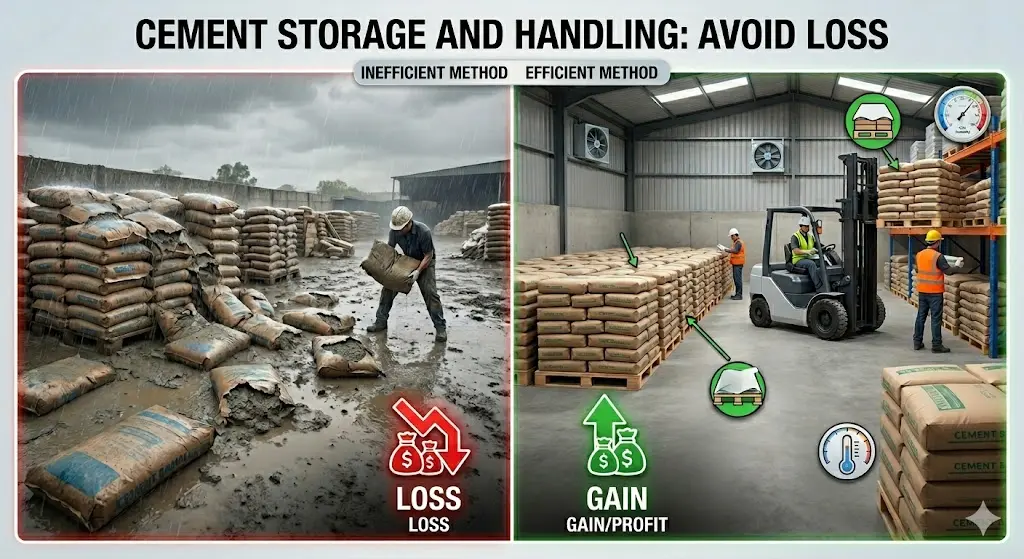
Dry mix stays viable for months. A bag stored in a dry, covered area — off the ground, away from direct moisture — performs as specified even six months after purchase. Polymer-modified products typically last 6–12 months; standard cement-sand blends can go up to a year.
Wet mortar has a short, hard deadline. Four to twelve hours, depending on temperature and admixtures. At 30°C ambient, the window shrinks fast. Silo agitation with slow-speed mixers can extend the window in cool conditions, but the underlying chemistry keeps moving — you can’t pause hydration.
The practical difference: with a dry mix, work pauses don’t waste material. Cover the job when the weather stops it, resume tomorrow with the same bag. With wet mix, any work pause ages the mortar toward discard. This is why intermittent, unpredictable schedules favor dry mix, and why continuous, coordinated jobs favor wet mix.
Environmental Impact
Factory production — whether dry or wet — eliminates the dust clouds from on-site mixing. Beijing’s 2007 ban on site-mixing cut construction dust complaints 30% within two years; over 100 Chinese cities adopted similar policies by 2015. Industry estimates suggest that on-site mixing causes roughly 10–15% of urban construction dust. Switching to factory-produced mortar made a measurable difference.
Material waste creates another environmental angle. Dry mix generates almost no waste — you store what you don’t use. Wet mortar typically wastes 5–15% of the volume ordered because unused material hardens and can’t be recovered. On a 100-cubic-yard project, that’s 8–25 tons of hardened mortar going to landfill.
Delivery emissions favor dry mix for distant sites. Wet mortar requires fuel-consuming truck transport proportional to distance. Dry mix bags consolidate into fewer bulk deliveries.
Compliance & Standards
ASTM C270 (US standard) allows two compliance paths: proportion-spec (assume compliance if ratios are followed) or property-spec (requires lab testing). Dry mix is factory-tested before shipping. Wet mix producers certify delivery specs, but actual quality depends on on-site timing and whether anyone re-tempers the material.
EN 998-1 and EN 998-2 (European standards) require both formats to declare compressive strength, water retention, and adhesive strength. Dry mix offers cleaner documentation because it hasn’t begun hydrating yet.
The verification difference: dry mix quality is confirmed at the factory. Wet mortar is confirmed at production, and then must be maintained through delivery. This requires on-site discipline — correct temperature, timely use, and no water addition.
How to Actually Decide
Start with project size. Under 50 square meters — maybe repointing or a small tile job — dry mix makes more sense than ordering a truck. Between 50 and 500 square meters, either format works depending on other factors. Over 500 square meters with multiple crews, wet mix probably wins on cost, assuming your schedule is disciplined enough to use it fast.
Next, think about work continuity. Is this a continuous job with crews working side-by-side every day? Or does weather, inspection hold-ups, or phasing pause the work for hours? Continuous work favors wet mix because you eliminate the mixing bottleneck. Intermittent work favors dry mix because pauses don’t waste material.
Do you need specialty products? Tile adhesives, waterproofing renders, thermal plaster, fireproofing mortar — these exist almost only in dry format. If your project includes any of these, you’re buying dry mix anyway, so keep it simple and use dry mix for the general masonry, too.
What’s your crew’s strength? Experienced crews with discipline handle water addition well. Crews focused on laying speed rather than mixing preferred wet mortar because they skipped mixing entirely.
Finally, what can you live with? Low waste tolerance and limited disposal capacity? Dry mix is your answer. Large commercial project with established waste management protocols? Wet mix waste (5–15%) becomes manageable.
Most project managers find that projects under 100 square meters with flexible timelines favor dry mix almost entirely. Projects over 1,000 square meters with stable daily volumes save 20–30% in labor with wet mix. The middle range depends on your team’s discipline and your schedule’s stability.
The honest answer: ask the three project managers you’ve worked with most recently what they actually used and what they’d change next time. That tells you more than any framework.
FAQ
Can you use both formats on the same job?
Yes. Large projects often use wet mortar for the continuous structural work and dry mix for repairs, specialty applications, and intermittent zones. The requirement: both have to meet the same type specification — you can’t mix Type S mortar with Type N.
Is dry mix actually weaker than wet mortar?
No — the specs are identical when everything goes right. Here’s what actually differs: dry mix quality gets locked in at the factory before it ships. Wet mortar quality depends on timing. Delay the application two hours in warm weather, and you’ve lost 10–20% strength compared to fresh mortar. That’s not a material weakness; that’s a timing problem.
How much water goes into the dry mix?
Follow the manufacturer’s ratio printed on the bag — typically 4.0–5.5 liters per 25kg. Use a measuring container rather than eyeballing it. Over-watering weakens it; under-watering makes it harder to work with and reduces bonding.
Why does wet mortar have such a short usable window?
The chemical reaction between water and cement starts immediately and cannot be paused. Retarders can extend the window to 8–12 hours in cool conditions, but the underlying chemistry is irreversible. Once the mortar begins setting, you can’t restore full workability. Adding water (re-tempering) violates ASTM C270 and weakens the mortar.
What about cost — is dry mix cheaper overall?
On material alone, yes — $5–$15 per bag versus delivery pricing. The total project cost depends on the scale. Small projects favor dry mix by 20–40% total cost. Large continuous projects may favor wet mix by 5–15% when labor savings offset the higher per-unit cost.
What about old-fashioned on-site mixing?
It’s the least consistent and most wasteful option. Both factory-produced formats — dry and wet — are far superior to shovel-mixing cement and sand by volume. Government mandates in multiple countries now restrict or ban on-site mixing for environmental and quality reasons.
Conclusion
It comes down to your specific situation: project size, work schedule, specialty product needs, crew skill, and how much waste you can handle. Dry mix dominates globally because it handles what most jobs actually face — long shelf life, diverse product options, and minimal waste. Wet mortar makes sense for big, continuous projects where speed and labor savings outweigh storage constraints.
Neither is objectively better. Both meet the same specs when used properly. The real answer depends on your team’s experience, timeline flexibility, and whether you can absorb schedule delays.
In practice, ask yourself: do you need materials to sit around for weeks (dry mix), or is everything happening at once (wet mix)? For most trades, that one question settles it. When you’re unsure, talk to contractors who’ve done similar work. That’s always more useful than a decision framework.